Pressure-Drive Technology: An Integrated Solution for Enhanced Oil Recovery
A Four-Part Series on Pressure-Drive EOR Technology
Editor's Note: In an era where global energy transition and deep reservoir development proceed hand in hand, Pressure-Drive Technology is emerging as a transformative force in Enhanced Oil Recovery. This four-part series explores the technology from its cognitive and psychological barriers, through the thermodynamic, fluid mechanic, and chemical mechanisms at its core, to precision measurement with the Spinning Drop Tensiometer, and finally to landmark field applications across China and the global evolution roadmap toward 2030.

Part 1: Definition, Challenges, and Paradigm Shift of Pressure-Drive Technology
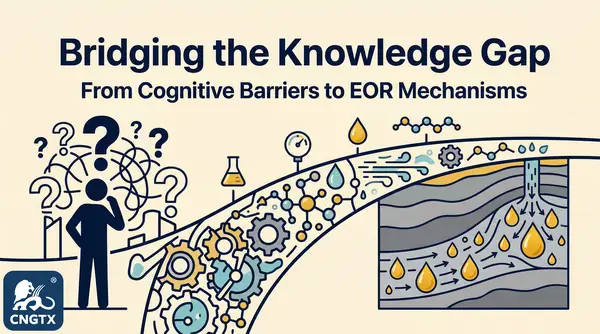 As the opening of this series, this section serves as a bridge to understanding the complex physicochemical and fluid mechanic mechanisms that follow. Before delving into subterranean fluid dynamics, we must first overcome the macroscopic cognitive barriers that hinder petroleum engineering innovation and establish the standard engineering definition of Pressure-Drive Technology in the field of Enhanced Oil Recovery.
1.1 Standard Definition and Core Characteristics of Pressure-Drive Technology
As the opening of this series, this section serves as a bridge to understanding the complex physicochemical and fluid mechanic mechanisms that follow. Before delving into subterranean fluid dynamics, we must first overcome the macroscopic cognitive barriers that hinder petroleum engineering innovation and establish the standard engineering definition of Pressure-Drive Technology in the field of Enhanced Oil Recovery.
1.1 Standard Definition and Core Characteristics of Pressure-Drive Technology
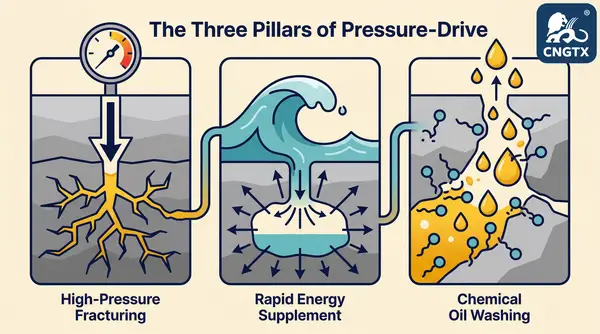 Pressure-Drive Technology (fracturing-assisted water flooding and pressure-driven energy supplementation) is a disruptive composite Enhanced Oil Recovery (EOR) technology. From the rigorous definition of system engineering, it integrates high-pressure fracturing, rapid energy supplement, and displacement stimulation. Over the past decades, due to minuscule pores and extremely poor permeability, a massive number of low-permeability, ultra-low permeability, and tight oil reservoirs faced the dilemma of being "unable to drink water," earning them the moniker of "hungry reservoirs". Distinguishing itself from conventional water injection where pressure must remain strictly below the formation fracture pressure, distinct from conventional fracturing which only focuses on long fracture conductivity with insufficient energy supplementation, and fundamentally different from traditional chemical flooding which suffers from limited sweep volume in tight pores, Pressure-Drive Technology stands out with its exceptional core characteristics of integration and synergistic effect. It utilizes ultra-high pressure far exceeding the formation fracture pressure (typically 30-55 MPa, or even up to 100 MPa) and massive displacement volumes (300-1000 cubic meters per day) to forcefully inject water or chemical agents into the reservoir in an extremely short time, proactively constructing artificial complex micro-fracture networks within the tight matrix, thereby thoroughly opening "highways" for crude oil flow.
1.2 Breaking the "Golden Rules": Engineering Psychological Barriers and Trust Crisis
Pressure-Drive Technology (fracturing-assisted water flooding and pressure-driven energy supplementation) is a disruptive composite Enhanced Oil Recovery (EOR) technology. From the rigorous definition of system engineering, it integrates high-pressure fracturing, rapid energy supplement, and displacement stimulation. Over the past decades, due to minuscule pores and extremely poor permeability, a massive number of low-permeability, ultra-low permeability, and tight oil reservoirs faced the dilemma of being "unable to drink water," earning them the moniker of "hungry reservoirs". Distinguishing itself from conventional water injection where pressure must remain strictly below the formation fracture pressure, distinct from conventional fracturing which only focuses on long fracture conductivity with insufficient energy supplementation, and fundamentally different from traditional chemical flooding which suffers from limited sweep volume in tight pores, Pressure-Drive Technology stands out with its exceptional core characteristics of integration and synergistic effect. It utilizes ultra-high pressure far exceeding the formation fracture pressure (typically 30-55 MPa, or even up to 100 MPa) and massive displacement volumes (300-1000 cubic meters per day) to forcefully inject water or chemical agents into the reservoir in an extremely short time, proactively constructing artificial complex micro-fracture networks within the tight matrix, thereby thoroughly opening "highways" for crude oil flow.
1.2 Breaking the "Golden Rules": Engineering Psychological Barriers and Trust Crisis
 However, in the historical process of promoting Pressure-Drive Technology, the greatest obstacle often did not come from the hardness of geological rocks, but rather from deep-rooted cognitive biases at the levels of engineering psychology and organizational behavior. For a long time, the global petroleum engineering community adhered to an insurmountable "golden rule": injection pressure must absolutely never exceed the formation fracture pressure, otherwise it would lead to catastrophic formation fracturing and uncontrollable water channeling. Research utilizing the Psychological Technology Adoption Framework (P-TAF) indicates that corporate decision-makers, when faced with disruptive innovation, often exhibit strong risk aversion, fear of uncertainty, and the "Not Invented Here" syndrome. This "engineering mindset" led to severe institutional distrust. Engineers feared the potential equipment failures and production losses associated with breaking traditional rules, a psychological barrier that was further magnified when dealing with the operation of high-pressure pump units facing extreme pressures (up to 105 MPa limits), severely delaying the widespread adoption of this technology in its early historical stages.
1.3 Digital Twins and Pilot Tests: Rebuilding Technical Trust
However, in the historical process of promoting Pressure-Drive Technology, the greatest obstacle often did not come from the hardness of geological rocks, but rather from deep-rooted cognitive biases at the levels of engineering psychology and organizational behavior. For a long time, the global petroleum engineering community adhered to an insurmountable "golden rule": injection pressure must absolutely never exceed the formation fracture pressure, otherwise it would lead to catastrophic formation fracturing and uncontrollable water channeling. Research utilizing the Psychological Technology Adoption Framework (P-TAF) indicates that corporate decision-makers, when faced with disruptive innovation, often exhibit strong risk aversion, fear of uncertainty, and the "Not Invented Here" syndrome. This "engineering mindset" led to severe institutional distrust. Engineers feared the potential equipment failures and production losses associated with breaking traditional rules, a psychological barrier that was further magnified when dealing with the operation of high-pressure pump units facing extreme pressures (up to 105 MPa limits), severely delaying the widespread adoption of this technology in its early historical stages.
1.3 Digital Twins and Pilot Tests: Rebuilding Technical Trust
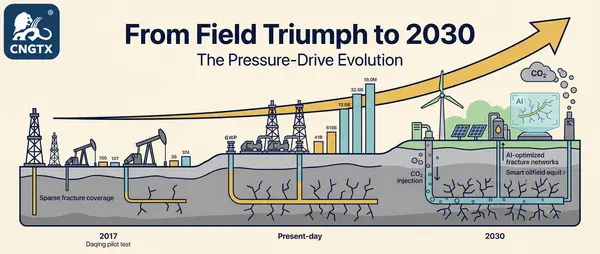
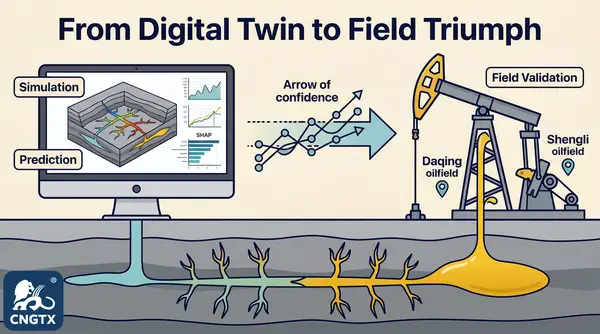 To overcome this deep-seated dual psychological and engineering obstacle, oilfield managers and technological pioneers adopted a highly integrated "geology-engineering-technology" strategy, successfully achieving a paradigm shift. From a psychological perspective, the key to building technical trust lies in transparent risk perception management and sufficient scientific validation. By introducing high-precision numerical simulations, digital twin technologies, and big data analysis (such as SHAP analysis), technicians were able to intuitively demonstrate to decision-makers the controllability of high-pressure fracturing in tight rocks, proving that it not only avoids chaotic water channeling but instead forms short, wide, complex micro-fracture networks that effectively improve the flow field. Such strategic large-scale field pilot tests (like the first on-site experiment in Daqing Lamaizhen Oilfield in 2017 and its subsequent comprehensive promotion in Shengli Oilfield) shattered the cognitive shackles of the "golden rule" with irrefutable historical production data, proving that Pressure-Drive Technology is the optimal solution for the "uninjectable and unextractable" dilemma.
1.4 From Macroscopic Validation to Microscopic Mechanisms
When psychological barriers are dismantled by the successes of macroscopic system engineering, a broad industry consensus is formed regarding breaking the fracture pressure limits. At this point, the research frontier of Pressure-Drive Technology formally descends from macroscopic engineering validation entirely into the microscopic realms of fluid mechanics and interfacial physical chemistry.
This cognitive awakening lifts the veil on complex subterranean systems. In the next part, we will dive deep inside the reservoir to dissect in detail how high-pressure fluids, governed by thermodynamics and fluid mechanics, achieve the precise "strangulation" and replacement of residual crude oil through three core mechanisms.
To overcome this deep-seated dual psychological and engineering obstacle, oilfield managers and technological pioneers adopted a highly integrated "geology-engineering-technology" strategy, successfully achieving a paradigm shift. From a psychological perspective, the key to building technical trust lies in transparent risk perception management and sufficient scientific validation. By introducing high-precision numerical simulations, digital twin technologies, and big data analysis (such as SHAP analysis), technicians were able to intuitively demonstrate to decision-makers the controllability of high-pressure fracturing in tight rocks, proving that it not only avoids chaotic water channeling but instead forms short, wide, complex micro-fracture networks that effectively improve the flow field. Such strategic large-scale field pilot tests (like the first on-site experiment in Daqing Lamaizhen Oilfield in 2017 and its subsequent comprehensive promotion in Shengli Oilfield) shattered the cognitive shackles of the "golden rule" with irrefutable historical production data, proving that Pressure-Drive Technology is the optimal solution for the "uninjectable and unextractable" dilemma.
1.4 From Macroscopic Validation to Microscopic Mechanisms
When psychological barriers are dismantled by the successes of macroscopic system engineering, a broad industry consensus is formed regarding breaking the fracture pressure limits. At this point, the research frontier of Pressure-Drive Technology formally descends from macroscopic engineering validation entirely into the microscopic realms of fluid mechanics and interfacial physical chemistry.
This cognitive awakening lifts the veil on complex subterranean systems. In the next part, we will dive deep inside the reservoir to dissect in detail how high-pressure fluids, governed by thermodynamics and fluid mechanics, achieve the precise "strangulation" and replacement of residual crude oil through three core mechanisms.
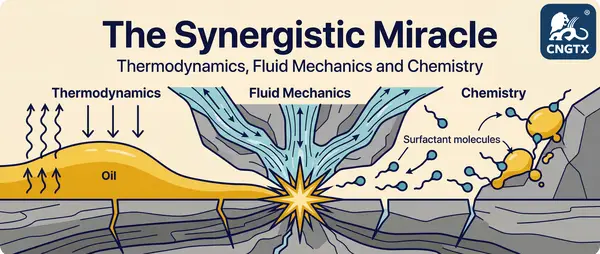
Part 2: Three Core Mechanisms — Fracturing, Energy Supplement, and Chemical Oil Washing
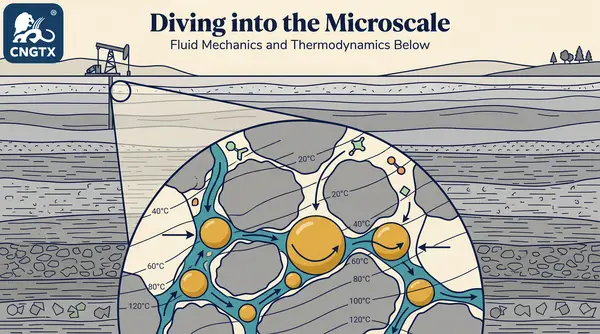 Having overcome the macroscopic cognitive engineering barriers, this section will guide readers into the microscopic world of fluid mechanics and thermodynamics. As the core content of this popular science article, we will systematically deconstruct the three fundamental mechanisms upon which Pressure-Drive Technology relies, revealing its operating principles under extreme physical conditions.
2.1 Three Synergistic Mechanisms of Pressure-Drive Technology
Having overcome the macroscopic cognitive engineering barriers, this section will guide readers into the microscopic world of fluid mechanics and thermodynamics. As the core content of this popular science article, we will systematically deconstruct the three fundamental mechanisms upon which Pressure-Drive Technology relies, revealing its operating principles under extreme physical conditions.
2.1 Three Synergistic Mechanisms of Pressure-Drive Technology
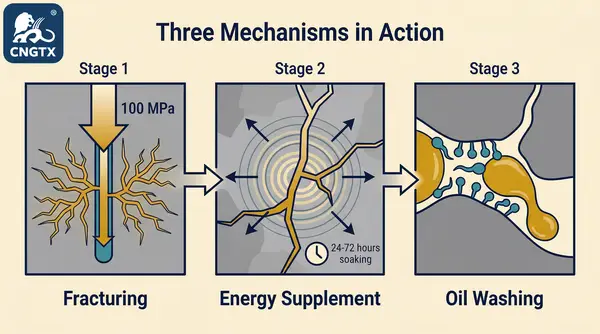 The reason Pressure-Drive Technology can generate disruptive Enhanced Oil Recovery effects is fundamentally attributed to the following three synergistic mechanisms, which perfectly answer the core question of "why the technology can increase production and injection":
2.1.1 High-Pressure Fracturing and Volume Expansion
This is not merely mechanical destruction, but a reconstruction in fluid mechanics. Utilizing fluid pressures far exceeding the formation fracture gradient (up to 100 MPa), tensile fractures are induced in the tight rock. This process is equivalent to tearing a complex micro-fracture network into an originally sealed matrix, instantly expanding the fluid's swept volume, reducing the initially massive seepage resistance by over 60%, and paving "highways" for subsequent fluid exchange.
2.1.2 Rapid Pressure Transmission and Energy Supplement
Non-Darcy flow in fluid mechanics indicates that in low-permeability media, fluid flow must overcome a massive threshold pressure gradient. Through continuous large-displacement injection of hundreds or even thousands of cubic meters per day, followed by a 24 to 72-hour "soaking" operation, extremely high fluid potential energy is rapidly transmitted and reaches thermodynamic equilibrium between the fractures and the matrix. This forceful supplementation fills the pressure deficit caused by years of extraction within days, reconstructing the high-pressure stress field of the formation and providing a surging elastic driving force for the dispersed crude oil.
2.1.3 Chemical Resistance Reduction and Oil Washing
Pure mechanical pressure is insufficient to strip crude oil that is tightly adsorbed onto the rock. By adding chemical additives such as surfactants to the pressure-drive fluid, the technology achieves a dual physical and chemical effect. Surfactants not only drastically reduce the oil-water interfacial tension but also trigger the reversal of rock surface wettability (from oil-wet to water-wet), thereby reducing capillary resistance, stripping, deforming, and dispersing the residual oil film into tiny droplets, which are ultimately efficiently washed out with the water flow.
2.2 Chemical Agent Adsorption Loss and Multiphase Flow Resistance
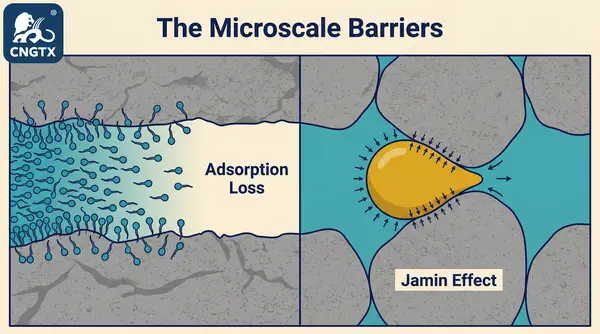 However, implementing the aforementioned mechanisms in the harsh subterranean environment of tight reservoirs encounters immense physicochemical challenges. The first is the high adsorption loss of chemical agents. Thermodynamic research shows that under conventional water injection velocities, surfactant molecules have ample time to undergo strong physical and electrostatic adsorption (a spontaneous endothermic process) with clay minerals and rock surfaces. This adsorption leads to the depletion of effective chemical components before the displacement fluid penetrates deep into the reservoir, severely weakening the effect of resistance reduction and oil washing. Secondly, the Jamin effect and microscopic capillary forces in low-permeability pore throats are immense; multiphase fluids interweave in extremely narrow nanoscale channels, making it difficult to achieve thorough displacement at the microscopic level relying solely on mechanical pressure differentials.
2.3 High-Pressure Reduced Adsorption and Gemini Surfactant Systems
However, implementing the aforementioned mechanisms in the harsh subterranean environment of tight reservoirs encounters immense physicochemical challenges. The first is the high adsorption loss of chemical agents. Thermodynamic research shows that under conventional water injection velocities, surfactant molecules have ample time to undergo strong physical and electrostatic adsorption (a spontaneous endothermic process) with clay minerals and rock surfaces. This adsorption leads to the depletion of effective chemical components before the displacement fluid penetrates deep into the reservoir, severely weakening the effect of resistance reduction and oil washing. Secondly, the Jamin effect and microscopic capillary forces in low-permeability pore throats are immense; multiphase fluids interweave in extremely narrow nanoscale channels, making it difficult to achieve thorough displacement at the microscopic level relying solely on mechanical pressure differentials.
2.3 High-Pressure Reduced Adsorption and Gemini Surfactant Systems
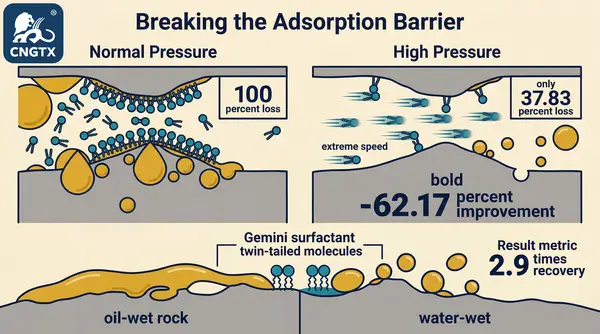 To combat these microscopic challenges, Pressure-Drive Technology demonstrates its unique wisdom as a product of multidisciplinary integration. Research has discovered and verified the effectiveness of the high-pressure reduced adsorption mechanism. Under ultra-high pressure and large-displacement injection conditions, the fluid velocity in the near-wellbore area and micro-fractures is extremely fast, exponentially compressing the contact time between chemical agents and the rock surface, which kinetically strongly inhibits the occurrence of adsorption reactions. Experimental data indicates that under high-pressure conditions, the adsorption loss of pressure-drive agents on the core surface is drastically reduced by 62.17% compared to normal pressure conditions. This miracle of coupling fluid mechanics and interfacial chemistry ensures that high-concentration oil-washing agents can be directly delivered deep into the reservoir. Furthermore, the developed Gemini Surfactant slick water system, while achieving an extremely low dynamic filtration damage rate (only 3.2%), can forcefully reverse oil-wet surfaces to water-wet, bringing its final displacement recovery degree to 2.9 times that of ordinary water flooding huff-n-puff.
2.4 Toward Precision Measurement of Ultra-Low Interfacial Tension
Having established channels through physical high-pressure fracturing and overcome chemical adsorption loss utilizing fluid dynamic effects, Pressure-Drive Technology successfully delivers its "ammunition" to the front lines. However, the ultimate ceiling that determines the microscopic oil-washing efficiency lies in the nanometer-thick film at the oil-water interface.
This draws our attention to the most core metric of oilfield chemistry: ultra-low interfacial tension. To develop and verify these chemical systems capable of maintaining extreme states under high temperature and high pressure, traditional measuring instruments have been rendered powerless, and a revolution concerning precision instruments is about to unfold.
To combat these microscopic challenges, Pressure-Drive Technology demonstrates its unique wisdom as a product of multidisciplinary integration. Research has discovered and verified the effectiveness of the high-pressure reduced adsorption mechanism. Under ultra-high pressure and large-displacement injection conditions, the fluid velocity in the near-wellbore area and micro-fractures is extremely fast, exponentially compressing the contact time between chemical agents and the rock surface, which kinetically strongly inhibits the occurrence of adsorption reactions. Experimental data indicates that under high-pressure conditions, the adsorption loss of pressure-drive agents on the core surface is drastically reduced by 62.17% compared to normal pressure conditions. This miracle of coupling fluid mechanics and interfacial chemistry ensures that high-concentration oil-washing agents can be directly delivered deep into the reservoir. Furthermore, the developed Gemini Surfactant slick water system, while achieving an extremely low dynamic filtration damage rate (only 3.2%), can forcefully reverse oil-wet surfaces to water-wet, bringing its final displacement recovery degree to 2.9 times that of ordinary water flooding huff-n-puff.
2.4 Toward Precision Measurement of Ultra-Low Interfacial Tension
Having established channels through physical high-pressure fracturing and overcome chemical adsorption loss utilizing fluid dynamic effects, Pressure-Drive Technology successfully delivers its "ammunition" to the front lines. However, the ultimate ceiling that determines the microscopic oil-washing efficiency lies in the nanometer-thick film at the oil-water interface.
This draws our attention to the most core metric of oilfield chemistry: ultra-low interfacial tension. To develop and verify these chemical systems capable of maintaining extreme states under high temperature and high pressure, traditional measuring instruments have been rendered powerless, and a revolution concerning precision instruments is about to unfold.
Part 3: Ultra-Low Interfacial Tension Measurement and the Spinning Drop Tensiometer
 The previous text revealed how chemical agents achieve resistance reduction and oil washing in tight rocks, but the absolute scale measuring the strength of this oil-washing capability lies in an extreme physical quantity. This section will separately analyze the control standards of the chemical pressure-drive system regarding Interfacial Tension, and explain why, in this microscopic measurement battle, the Spinning Drop Tensiometer has become the only deadlock-breaking tool.
3.1 Standards and Decisive Role of Ultra-Low Interfacial Tension
The previous text revealed how chemical agents achieve resistance reduction and oil washing in tight rocks, but the absolute scale measuring the strength of this oil-washing capability lies in an extreme physical quantity. This section will separately analyze the control standards of the chemical pressure-drive system regarding Interfacial Tension, and explain why, in this microscopic measurement battle, the Spinning Drop Tensiometer has become the only deadlock-breaking tool.
3.1 Standards and Decisive Role of Ultra-Low Interfacial Tension
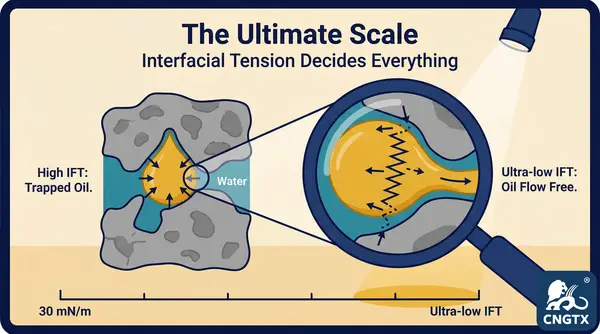
 The requirement for Interfacial Tension (IFT) is a key knowledge point of Pressure-Drive Technology. Interfacial tension refers to the shrinking force existing on the contact surface of two immiscible liquids (such as oil and water). At the physical chemistry level, the higher the interfacial tension, the harder it is for crude oil to peel off from the rock pore surface; it is inversely proportional to the capillary pore diameter, generating immense capillary resistance in the micro- or even nano-scale pore throats of tight reservoirs, firmly locking the crude oil in place. Therefore, the core functional significance of the chemical pressure-drive system lies in forcefully reducing this resistance.
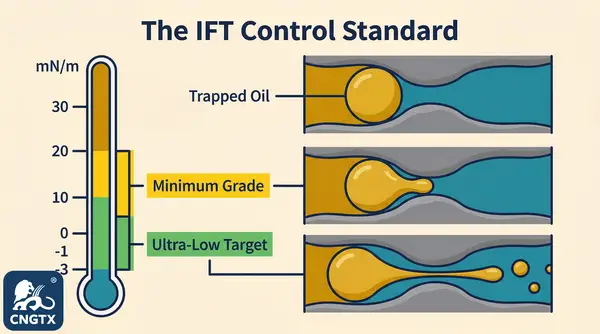
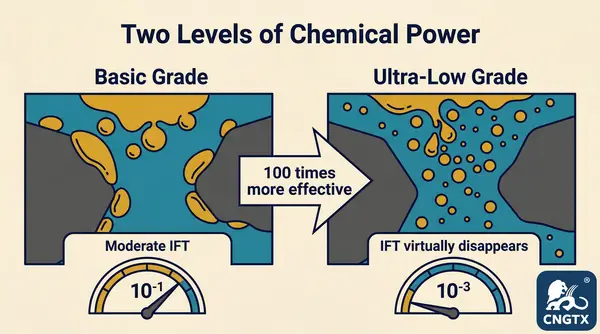
Standard chemical pressure-drive systems possess explicit control standards. The minimum passing grade requires the interfacial tension to drop below 10⁻¹ mN/m to achieve basic pressure reduction and injection enhancement; however, to completely break the confinement of oil droplets, activate residual oil, and truly achieve efficient "oil washing" at the microscopic level, its ideal target must reach Ultra-Low Interfacial Tension (typically defined as the order of 10⁻³ mN/m). Under the state of ultra-low interfacial tension, crude oil droplets overcome the constraints of thermodynamic interfacial energy, becoming extremely susceptible to deformation, elongation, and emulsification, eventually being thoroughly displaced along with the high-speed flow field of the injected water.
3.2 Why Conventional Measurement Methods Fail
The requirement for Interfacial Tension (IFT) is a key knowledge point of Pressure-Drive Technology. Interfacial tension refers to the shrinking force existing on the contact surface of two immiscible liquids (such as oil and water). At the physical chemistry level, the higher the interfacial tension, the harder it is for crude oil to peel off from the rock pore surface; it is inversely proportional to the capillary pore diameter, generating immense capillary resistance in the micro- or even nano-scale pore throats of tight reservoirs, firmly locking the crude oil in place. Therefore, the core functional significance of the chemical pressure-drive system lies in forcefully reducing this resistance.
Standard chemical pressure-drive systems possess explicit control standards. The minimum passing grade requires the interfacial tension to drop below 10⁻¹ mN/m to achieve basic pressure reduction and injection enhancement; however, to completely break the confinement of oil droplets, activate residual oil, and truly achieve efficient "oil washing" at the microscopic level, its ideal target must reach Ultra-Low Interfacial Tension (typically defined as the order of 10⁻³ mN/m). Under the state of ultra-low interfacial tension, crude oil droplets overcome the constraints of thermodynamic interfacial energy, becoming extremely susceptible to deformation, elongation, and emulsification, eventually being thoroughly displaced along with the high-speed flow field of the injected water.
3.2 Why Conventional Measurement Methods Fail
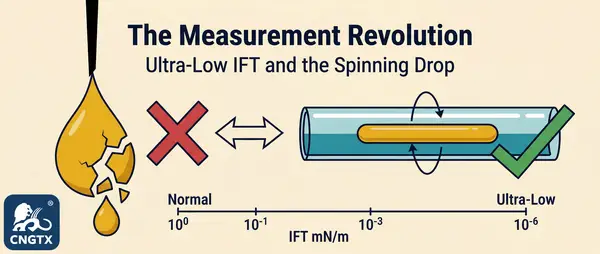
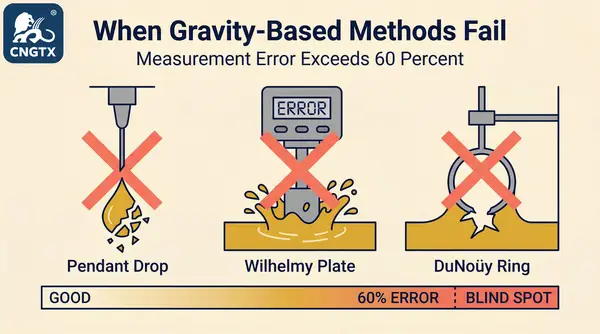 However, once we push the interfacial tension requirements to the limit of 10⁻³ mN/m, the physical bottlenecks of traditional scientific instruments are starkly exposed. Widely used surface tension measurement methods in the industry, such as the Pendant Drop, Wilhelmy Plate, or DuNoüy Ring methods, all rely on the mechanical equilibrium between gravity or mechanical buoyancy and surface tension. When attempting to measure Ultra-Low Interfacial Tension, because the tension is extremely weak, under the influence of gravity, the Bond number (a dimensionless number measuring the ratio of gravitational force to surface tension) approaches infinity, and the droplet cannot maintain a suspended state at all; it will instantly shatter, detach, or disperse into the continuous phase. When facing pressure-drive chemical agents, these conventional gravity-based measurement methods suffer measurement errors soaring past 60%, or even fail to yield any readings whatsoever, leaving the screening and development of chemical agents in a blind spot.
3.3 Spinning Drop Tensiometer: Centrifugal Force Field Measurement Principle
However, once we push the interfacial tension requirements to the limit of 10⁻³ mN/m, the physical bottlenecks of traditional scientific instruments are starkly exposed. Widely used surface tension measurement methods in the industry, such as the Pendant Drop, Wilhelmy Plate, or DuNoüy Ring methods, all rely on the mechanical equilibrium between gravity or mechanical buoyancy and surface tension. When attempting to measure Ultra-Low Interfacial Tension, because the tension is extremely weak, under the influence of gravity, the Bond number (a dimensionless number measuring the ratio of gravitational force to surface tension) approaches infinity, and the droplet cannot maintain a suspended state at all; it will instantly shatter, detach, or disperse into the continuous phase. When facing pressure-drive chemical agents, these conventional gravity-based measurement methods suffer measurement errors soaring past 60%, or even fail to yield any readings whatsoever, leaving the screening and development of chemical agents in a blind spot.
3.3 Spinning Drop Tensiometer: Centrifugal Force Field Measurement Principle
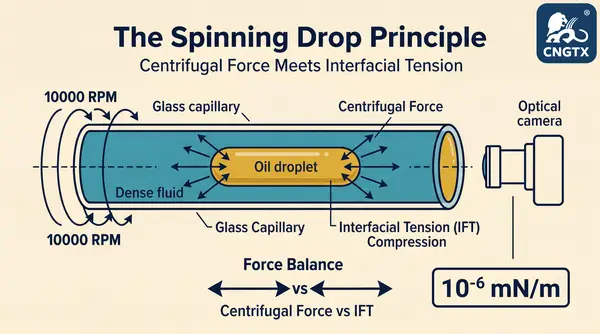 To shatter these physical shackles, the article will explain that measuring Ultra-Low Interfacial Tension is achieved solely with a Spinning Drop Tensiometer (such as the industry-renowned SVT series or the TX500HP model that supports high temperature and pressure). This instrument abandons the failing gravitational field and creatively introduces the centrifugal force field from fluid mechanics. The measurement principle involves placing a horizontal glass capillary tube containing a dense bulk phase (pressure-drive fluid) and a lighter drop phase (crude oil), rotating it at extremely high angular velocities (up to 10,000 RPM) around its long axis.
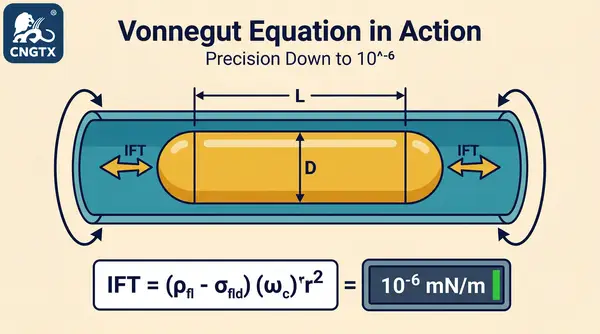 Under the intense centrifugal force, the denser fluid is pushed against the tube walls, while the lighter oil droplet is squeezed to the central axis of rotation. The centrifugal force attempts to infinitely elongate the oil droplet into a cylinder, while the remaining faint interfacial tension in the system resists the deformation, struggling to restore it to a spherical shape. When these two forces reach hydrodynamic equilibrium, by capturing the length-width deformation of the oil droplet through an optical contour analysis system and applying the classic Vonnegut's equation, it eliminates the need for complex interface curvature estimations, achieving extremely high-precision measurements down to 10⁻⁶ mN/m. This is currently the only known testing cornerstone capable of accurately evaluating the oil-washing efficiency of surfactants under simulated reservoir conditions such as high temperature and high pressure.
3.4 From Laboratory Screening to Field Verification
It is precisely relying on the rigorous screening of thousands of chemical formulations in the laboratory using the Spinning Drop Tensiometer that oilfield engineers can confidently inject these nanoscale fluids containing surfactants deep into the earth thousands of meters below.
When extremely precise microscopic chemical systems are combined with extremely violent macroscopic high-pressure pump units, it forms the invincible integrated core of Pressure-Drive Technology. Next, we will shift our vision from the microscope out to the vast oilfields, using highly persuasive historical data to witness the production-enhancing miracles created by this technology across various complex reservoirs.
Under the intense centrifugal force, the denser fluid is pushed against the tube walls, while the lighter oil droplet is squeezed to the central axis of rotation. The centrifugal force attempts to infinitely elongate the oil droplet into a cylinder, while the remaining faint interfacial tension in the system resists the deformation, struggling to restore it to a spherical shape. When these two forces reach hydrodynamic equilibrium, by capturing the length-width deformation of the oil droplet through an optical contour analysis system and applying the classic Vonnegut's equation, it eliminates the need for complex interface curvature estimations, achieving extremely high-precision measurements down to 10⁻⁶ mN/m. This is currently the only known testing cornerstone capable of accurately evaluating the oil-washing efficiency of surfactants under simulated reservoir conditions such as high temperature and high pressure.
3.4 From Laboratory Screening to Field Verification
It is precisely relying on the rigorous screening of thousands of chemical formulations in the laboratory using the Spinning Drop Tensiometer that oilfield engineers can confidently inject these nanoscale fluids containing surfactants deep into the earth thousands of meters below.
When extremely precise microscopic chemical systems are combined with extremely violent macroscopic high-pressure pump units, it forms the invincible integrated core of Pressure-Drive Technology. Next, we will shift our vision from the microscope out to the vast oilfields, using highly persuasive historical data to witness the production-enhancing miracles created by this technology across various complex reservoirs.
Part 4: Field Application Data and Future Technology Roadmap
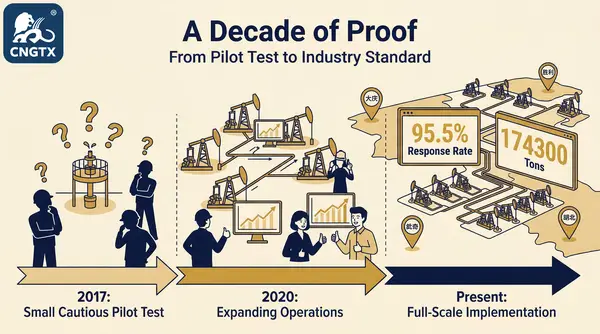 The ingenuity of theory must ultimately withstand the ruthless testing of field practice. After more than a decade of iterative evolution, Pressure-Drive Technology is no longer confined to theoretical hypotheses; instead, serving as solid historical evidence, it has fundamentally altered the extraction trajectory of oilfields in China and parts of the globe. This section will summarize its brilliant achievements in typical application scenarios and look forward to its new blueprint leading up to 2030.
4.1 Three Typical Scenarios and Field Data
The ingenuity of theory must ultimately withstand the ruthless testing of field practice. After more than a decade of iterative evolution, Pressure-Drive Technology is no longer confined to theoretical hypotheses; instead, serving as solid historical evidence, it has fundamentally altered the extraction trajectory of oilfields in China and parts of the globe. This section will summarize its brilliant achievements in typical application scenarios and look forward to its new blueprint leading up to 2030.
4.1 Three Typical Scenarios and Field Data
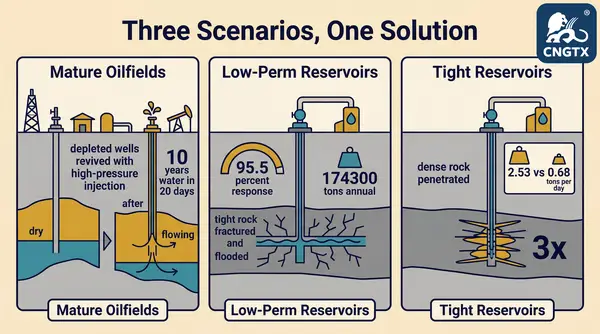 The reason Pressure-Drive Technology is hailed as the "killer app for stabilizing and increasing production in mature oilfields" lies in its extremely strong scenario adaptability. According to massive historical production data, the typical application scenarios for this technology are primarily concentrated in three major categories: mature oilfields, low-permeability reservoirs, and tight reservoirs.
The table below details the exhaustive data achieved through the application of this technology across major oilfields, intuitively showcasing its actual effects across four dimensions: oil increase, injection increase, pressure reduction, and energy supplement.
The reason Pressure-Drive Technology is hailed as the "killer app for stabilizing and increasing production in mature oilfields" lies in its extremely strong scenario adaptability. According to massive historical production data, the typical application scenarios for this technology are primarily concentrated in three major categories: mature oilfields, low-permeability reservoirs, and tight reservoirs.
The table below details the exhaustive data achieved through the application of this technology across major oilfields, intuitively showcasing its actual effects across four dimensions: oil increase, injection increase, pressure reduction, and energy supplement.
| Target Oilfield |
Typical Application Scenario |
Actual Application Effects & Core Data |
| Shengli Oilfield |
Low-permeability, ultra-low perm beach-bar sand |
Tackling impenetrable blocks, implemented in 139 well groups in Xianhe Plant in 2024 alone. Response rate hit 95.5%, cumulative oil increase reached 174,300 tons. Obvious pressure reduction and injection increase, EOR improved by 4-6%. |
| Wuqi Oilfield |
Tight sandstone (porosity 8%, perm < 0.3 mD) |
Adopted "large pre-fluid + surfactant" pressure-drive. Average daily oil hit 2.53 tons/well, over 3 times that of conventional fracturing (0.68 tons). Cumulative new profit 7.969 million yuan. |
| Huabei Oilfield |
Mature reservoirs with multi-year pressure deficit and depleted energy |
Facing dry formations, used pressure-drive water injection to forcefully inject 10 years' worth of water in just 20 days. Completely solved slow energy supplement, rapidly revitalizing depleted fault blocks. |
4.2 Heterogeneity-Driven Water Channeling and Multi-Technology Coupling Challenges
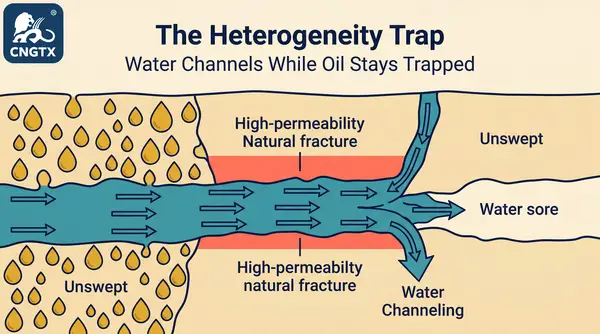 With the normalization of the technology's application, simple unidirectional injection can no longer satisfy the increasingly deteriorating geological conditions. Facing the intense heterogeneity of ultra-low permeability reservoirs, high-pressure, large-displacement fluids are highly prone to water channeling along high-permeability natural fractures, resulting in "good formations being flooded while poor ones remain dry," bottlenecking the improvement of sweep volume. Furthermore, to handle more complex reservoirs, the industry developed the "Pressure-Drive+" composite mode (e.g., combining thermal, CO2, chemical polymers); the deep coupling of such multi-fluid phases and multi-thermodynamic mechanisms poses exponentially growing system engineering challenges regarding project scheduling, Phase Behavior Control, anti-corrosion, and cost control.
4.3 Profile Control and Pressure-Drive + CO2 Miscible Displacement
With the normalization of the technology's application, simple unidirectional injection can no longer satisfy the increasingly deteriorating geological conditions. Facing the intense heterogeneity of ultra-low permeability reservoirs, high-pressure, large-displacement fluids are highly prone to water channeling along high-permeability natural fractures, resulting in "good formations being flooded while poor ones remain dry," bottlenecking the improvement of sweep volume. Furthermore, to handle more complex reservoirs, the industry developed the "Pressure-Drive+" composite mode (e.g., combining thermal, CO2, chemical polymers); the deep coupling of such multi-fluid phases and multi-thermodynamic mechanisms poses exponentially growing system engineering challenges regarding project scheduling, Phase Behavior Control, anti-corrosion, and cost control.
4.3 Profile Control and Pressure-Drive + CO2 Miscible Displacement
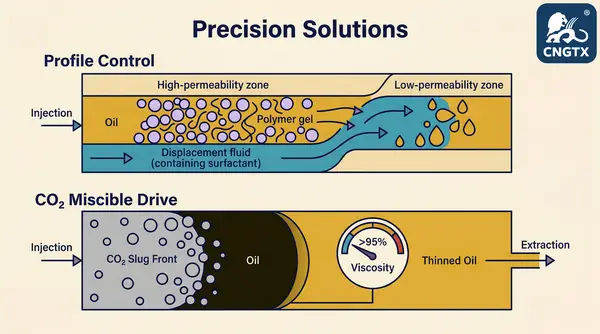 Addressing the water channeling issues caused by heterogeneity, technological strategies fully pivoted from "flood irrigation" to "precision drip irrigation" combined with flow field adjustment. By introducing the "Pressure-Drive + Polymer/Foam" composite technology, after utilizing high-pressure fracturing to establish channels, foam or weak gel is injected to generate a superimposed plugging effect, forcefully blocking high-permeability channels. This forces the subsequent displacement fluid, loaded with Ultra-Low Interfacial Tension surfactants, to divert into unswept low-permeability areas, achieving a triple-effect integration of "channel construction + deep oil washing + profile control and plugging". Particularly noteworthy is the star solution for heavy oil and ultra-low permeability tight rock layers: the "Pressure-Drive + Carbon Dioxide (CO2) Flooding" composite mechanism. This patented process injects a pre-CO2 slug front, utilizing its extremely high solubility (increased by >25%) and viscosity reduction rate (>95%) to achieve high-pressure miscible displacement, fundamentally altering the volumetric morphology and flow state of crude oil. This is then superimposed with pressure-drive water injection, achieving superior oil-washing efficiency at an extremely low cost.
4.4 CCUS and Digital Twins: 2030 Technology Roadmap
Addressing the water channeling issues caused by heterogeneity, technological strategies fully pivoted from "flood irrigation" to "precision drip irrigation" combined with flow field adjustment. By introducing the "Pressure-Drive + Polymer/Foam" composite technology, after utilizing high-pressure fracturing to establish channels, foam or weak gel is injected to generate a superimposed plugging effect, forcefully blocking high-permeability channels. This forces the subsequent displacement fluid, loaded with Ultra-Low Interfacial Tension surfactants, to divert into unswept low-permeability areas, achieving a triple-effect integration of "channel construction + deep oil washing + profile control and plugging". Particularly noteworthy is the star solution for heavy oil and ultra-low permeability tight rock layers: the "Pressure-Drive + Carbon Dioxide (CO2) Flooding" composite mechanism. This patented process injects a pre-CO2 slug front, utilizing its extremely high solubility (increased by >25%) and viscosity reduction rate (>95%) to achieve high-pressure miscible displacement, fundamentally altering the volumetric morphology and flow state of crude oil. This is then superimposed with pressure-drive water injection, achieving superior oil-washing efficiency at an extremely low cost.
4.4 CCUS and Digital Twins: 2030 Technology Roadmap
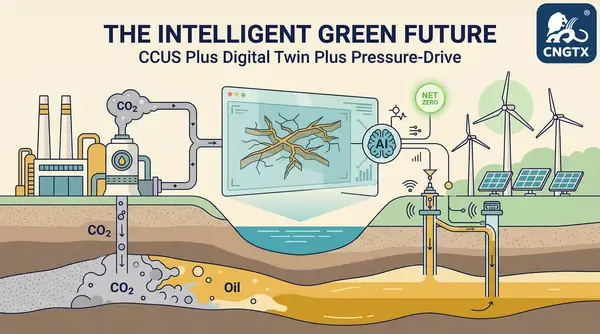 Historical data has already proven the supreme value of Pressure-Drive Technology in salvaging low-permeability oilfields. Looking ahead to the technological evolution toward 2030 and beyond, Pressure-Drive Technology will inevitably fully embrace the grand strategy of Carbon Capture, Utilization, and Storage (CCUS). Combining industrial exhaust CO2 with ultra-high-pressure forceful pressure-drive not only greatly enhances oil recovery but also locks carbon deep beneath the formation, transforming high-carbon-emitting oilfields into net-zero or even carbon-negative hubs. Concurrently, with the mature application of Digital Twin technology and AI algorithms, the "Pressure-Drive+" intelligent coordination system will be capable of millisecond-level computations regarding the real-time expansion of subterranean fracture networks and the dynamic variations in interfacial tension, achieving closed-loop intelligent control from project design to the automatic variable-frequency pressure regulation of pump units.
Evolving from a bold attempt to break industry rules into today's primary science and technology for the renaissance of mature oilfields, Pressure-Drive Technology stands as a magnificent victory of human cross-boundary integration spanning system engineering, mechanics, and chemical interfaces. In the future, it will continue to serve as a surging source of power, escorting the steady and sustainable development of global energy.
Historical data has already proven the supreme value of Pressure-Drive Technology in salvaging low-permeability oilfields. Looking ahead to the technological evolution toward 2030 and beyond, Pressure-Drive Technology will inevitably fully embrace the grand strategy of Carbon Capture, Utilization, and Storage (CCUS). Combining industrial exhaust CO2 with ultra-high-pressure forceful pressure-drive not only greatly enhances oil recovery but also locks carbon deep beneath the formation, transforming high-carbon-emitting oilfields into net-zero or even carbon-negative hubs. Concurrently, with the mature application of Digital Twin technology and AI algorithms, the "Pressure-Drive+" intelligent coordination system will be capable of millisecond-level computations regarding the real-time expansion of subterranean fracture networks and the dynamic variations in interfacial tension, achieving closed-loop intelligent control from project design to the automatic variable-frequency pressure regulation of pump units.
Evolving from a bold attempt to break industry rules into today's primary science and technology for the renaissance of mature oilfields, Pressure-Drive Technology stands as a magnificent victory of human cross-boundary integration spanning system engineering, mechanics, and chemical interfaces. In the future, it will continue to serve as a surging source of power, escorting the steady and sustainable development of global energy.